Programming
Redis Data Structures: A Pythonic Interface for Distributed Data Structures
Introducing redis-data-structures - A Python library providing high-level, Redis-backed data structures with a clean, Pythonic interface.
Tech x Product, AI & Data Enthusiast, Tech Co-Founder

Programming
Introducing redis-data-structures - A Python library providing high-level, Redis-backed data structures with a clean, Pythonic interface.
System Design
Following the previous post, now, we will talk about redis persistence. While primarily known as an in-memory database, Redis offers a sophisticated durability model through two complementary strategies: RDB snapshots and AOF logs. Let's dive deep into how these work, implementing our own RDB parser along the
System Design
Redis represents a masterclass in systems design, particularly in how it balances performance with architectural elegance. Through implementing a Redis-compatible server via the CodeCrafters challenge, we'll deconstruct two fundamental architectural decisions that shape Redis's behavior: its wire protocol (RESP) and its event-driven concurrency model.
Machine Learning
When working with Large Language Models (LLMs), one of the most powerful yet often misunderstood parameters is "temperature". This setting acts as a creativity dial, allowing you to fine-tune the model's output between deterministic precision and creative exploration. Let's dive into what temperature
Data Structures & Algorithms
Imagine this: you're playing your favorite video game, and an enemy drops a rare item. Or maybe you're shuffling your Spotify playlist, wondering how it picks the next song. Behind these everyday moments lies a fascinating paradox: how do computers, which are fundamentally deterministic machines, create
Data Structures & Algorithms
Description: https://leetcode.com/problems/first-missing-positive/description/ This problem requires finding the smallest missing positive integer in an unsorted array. The key challenge is achieving %O(N)% time and %O(1)% space complexity without using extra space for hash tables. Key insights: * Since we're looking for
Data Structures & Algorithms
Description: https://leetcode.com/problems/trapping-rain-water/description/ To solve this problem, the main observation is that at each index i, the amount of water that can be trapped depends on the the highest bars to its left and right elements, minus its own height. Key insights: * Water level
Programming
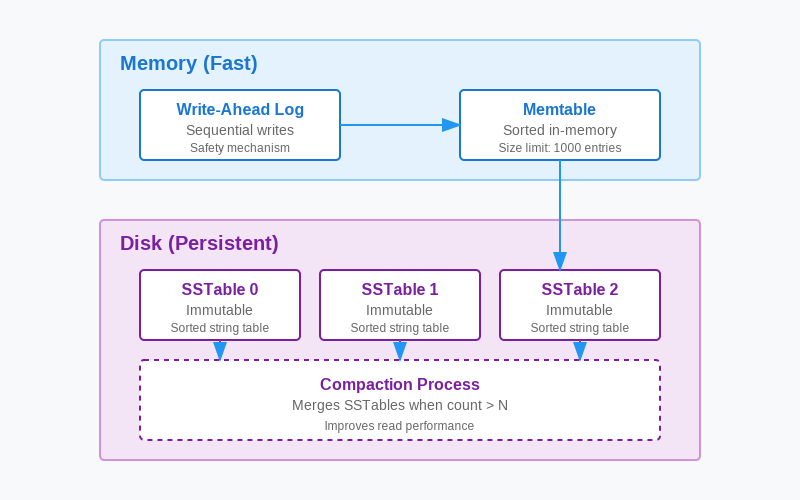
Learn core database concepts by implementing a Python key-value store with crash recovery and efficient writes. In this tutorial, we'll build a simple but functional database from scratch with Python. Through this hands-on project, we'll explore core database concepts like Write-Ahead Logging (WAL)
Data Structures & Algorithms
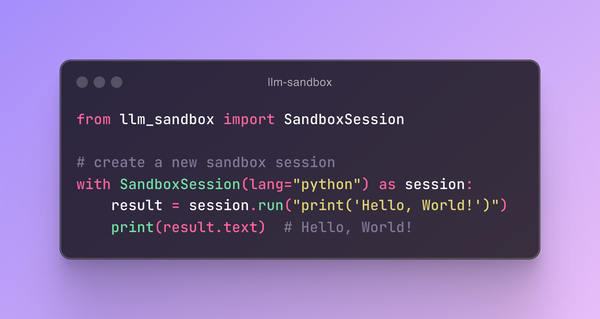
Hey mate, I recently tried to add something like the ChatGPT Code Interpreter plugin to my LLM application. I found many libraries and open-source options available, but they seemed a bit complicated to set up, and some required credits for cloud computing. So, I decided to develop my own

System Design
Concurrency is a vital aspect of modern programming, allowing applications to perform multiple tasks simultaneously, thus improving efficiency and responsiveness. In Python, developers often face the choice between using threads or processes to achieve concurrency. This blog explores the differences between these two concurrency models, how they interact with Python&

System Design
In the complex world of distributed systems and microservices, ensuring system stability and reliability is paramount. Stability patterns provide a set of strategies to maintain the robustness of a system under varying conditions. This post will explore essential stability patterns, their principles, and practical examples of implementing them in distributed

System Design
In the world of microservices, APIs are the backbone that enables communication and data exchange between different services. Designing robust, scalable, and maintainable APIs is crucial for the success of any microservices architecture. In this post, we'll explore the best practices for designing microservices APIs, covering key aspects